
People Will Talk: The Hidden Power of Reputation
Introduction
Evolutionary approaches have done much to identify the pressures that select for cooperative sentiment. This helps us understand when and why cooperation will arise, and applied research shows how these pressures can be harnessed to promote various types of cooperation. In particular, recent evidence shows how opportunities to acquire a good reputation can promote cooperation in the laboratory and applied settings. Cooperation can be promoted by tapping into forces like indirect reciprocity, costly signalling, and competitive altruism. When individuals help others, they receive reputational benefits (or avoid reputational costs), and this gives people an incentive to help. From an individual perspective, success is built on a foundation of character, communication, and trust. To accomplish our goals, people must believe in us. The Power of Reputation offers businesspeople an action plan for creating the kind of reputation that generates trust, inspires confidence, and provides a professional advantage. It is proven the power of reputation, the questions now – Do you know how to manage the Power of Reputation.
Introduction
Programme Outline
What’s inside this outline?
This outline provides a structured overview of the programme’s objectives, key topics, and learning flow. It is intended to help you assess relevance and suitability before engaging further.
Resources

People Will Talk: The Hidden Power of Reputation
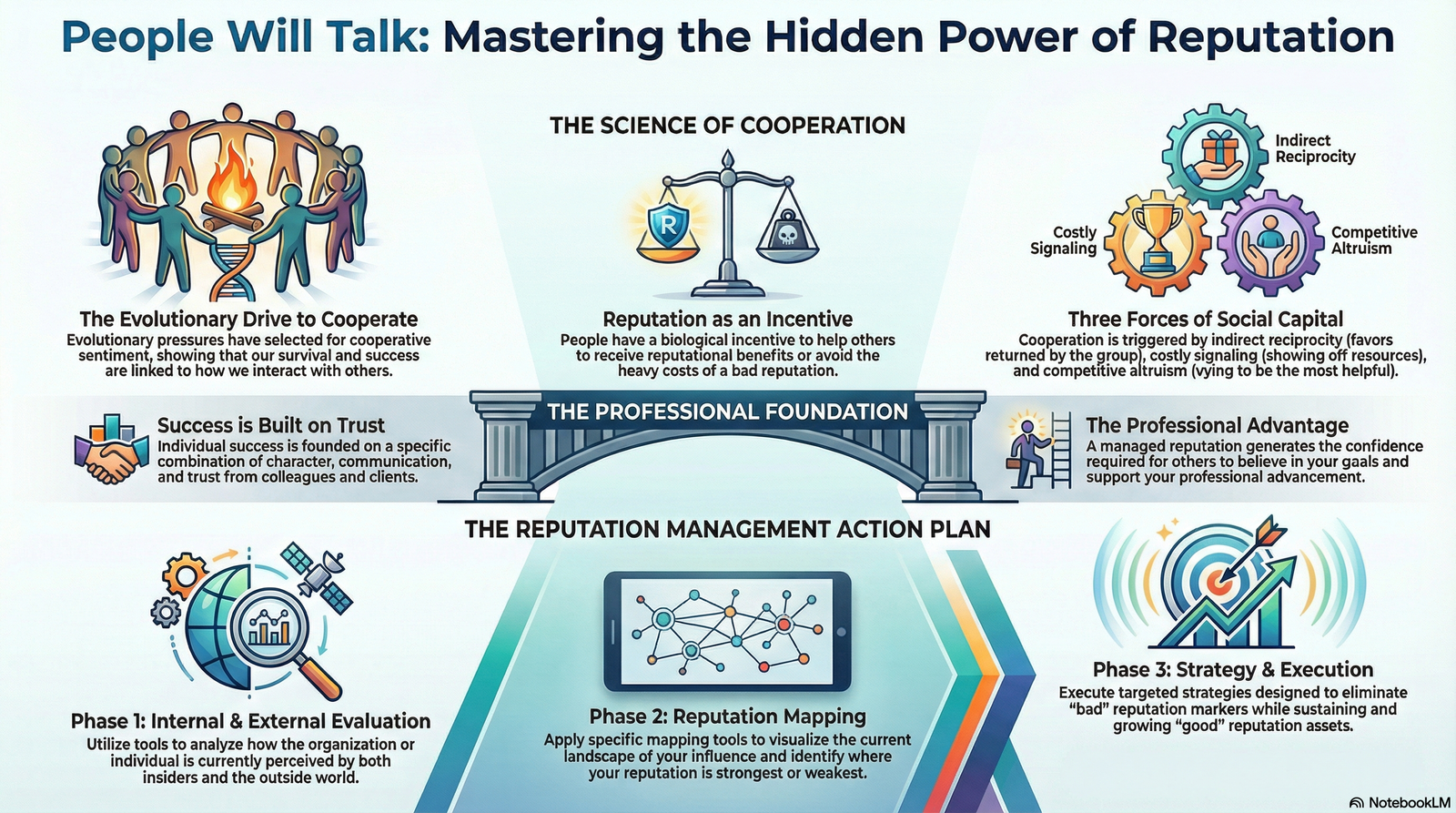
People Will Talk: The Hidden Power of Reputation
Interested in this programme?
Explore how this programme and its related resources can support your learning goals, organisational needs, or professional development.
- ✔ Comprehensive programme content
- ✔ Supporting articles and infographics
- ✔ Practitioner-led insights
- ✔ Suitable for multiple learning contexts
Or email us at training@hba.com.my